
Why Borneo is a Family’s Dream Destination for Eco-Tourism

Why Borneo is One of the World's Best Destinations for Families Who Love Nature
Some trips tick boxes. Borneo changes the way your child sees the world.
This ancient island, shared by Malaysia, Indonesia, and Brunei, is home to rainforests older than the Amazon, iconic wildlife, and crystal-clear waters where you can spot fish from the surface. For families seeking more than a resort pool and buffet breakfast, it is truly extraordinary.
At Apricous, we design parent-child journeys that foster genuine connections, not just itineraries. In Borneo, families enjoy immersive nature experiences, hands-on cultural activities, and opportunities for children to learn while parents build lasting memories.
Here's what makes it so special.
Ancient Rainforests That Feel Like Stepping Into Another World
Borneo's rainforests, over 130 million years old and older than dinosaurs, offer an experience with a child that no nature documentary can match.
The Danum Valley Conservation Area in Sabah is one of the most intact lowland rainforests remaining in Southeast Asia. Trails range from flat boardwalks suitable for young children to longer routes for more adventurous families. Early morning walks often yield sightings of gibbons, hornbills, and the occasional clouded leopard print in the mud.
Kinabalu Park is a UNESCO World Heritage Site. It offers well-managed trails and expert local guides. These guides make the experience come alive for children by pointing out pitcher plants that trap insects and explaining how fig trees feed an entire ecosystem.
A tip from our team: Book a guide who works regularly with families. The best ones carry a mental library of child-appropriate facts and have a talent for turning a two-hour walk into an adventure story your child will retell for months.
A moment worth creating: Before the walk, give your child a small notebook and ask them to sketch one thing they find fascinating. Comparing notes at the end of the day is a quiet, lovely ritual that turns observation into conversation.
Wildlife Encounters That Build Genuine Empathy
There are few experiences in family travel as affecting as watching an orphaned orangutan learn to climb at Sepilok Orangutan Rehabilitation Centre in Sabah. These animals share roughly 97% of human DNA, and children instinctively feel that connection.
The centre takes in orangutans that have been orphaned or rescued from habitat loss. Visitors watch feeding sessions from raised platforms. You are close enough to feel the encounter, yet far enough for the animals’ welfare. Staff explain the rehabilitation process clearly and in ways that resonate with younger visitors.
Nearby, the Bornean Sun Bear Conservation Centre offers a similar wildlife experience. The Kinabatangan River, about four hours from Sandakan by road, is one of the best places to spot pygmy elephants in the wild. It is a sight that stops adults mid-sentence.
What we tell parents: The value of these encounters is not just the sighting, it's the conversation that follows. Children who understand why wildlife needs protecting grow up differently. These moments plant seeds.
A moment worth creating: After a wildlife visit, ask your child which animal they'd most want to help, and why. You'll learn something about them.

River Safaris on the Kinabatangan — Calm, Beautiful, and Full of Surprises
The Kinabatangan River is Borneo's longest, winding through one of the most biodiverse corridors in Asia. Families travel it by small boat, typically at dawn or dusk, watching the riverbank for movement.
Proboscis monkeys, endemic to Borneo and unmistakable with their pendulous noses, gather in the trees to feed as the light fades. Crocodiles rest on mudbanks. Oriental darters dry their wings on low branches. The whole experience has a quality of quietness that children respond to surprisingly well.
Boats are small, covered, and equipped with life jackets. Good operators keep group sizes modest. They also match the family's pace unhurried, observational, and calm.
A tip from our team: Request an early-morning departure if your children are early risers. The mist on the water at 6 am, with a thermos of something warm, is one of those travel moments that stays with you.
A moment worth creating: Agree before the safari that whoever spots each species gets to name it for the day. It makes children extraordinarily attentive and produces some memorable animal names.
Eco-Lodges That Put Families in the Heart of It All
Choosing the right place to stay in Borneo is as important as the activities you choose. The island's eco-lodges minimise environmental impact and maximise immersion, making them excellent for families.
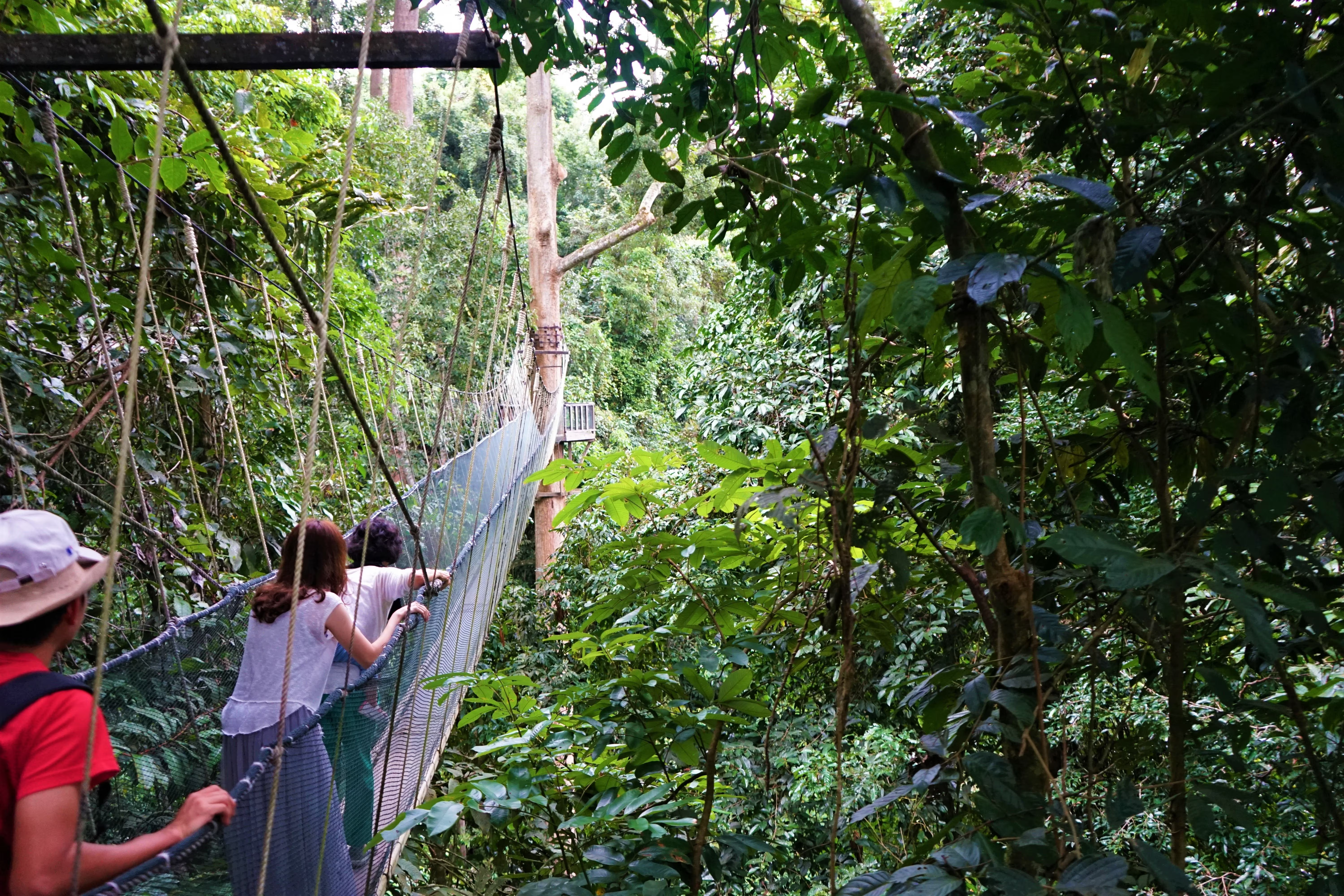
The Borneo Rainforest Lodge in Danum Valley sits at the forest edge, with family cabins, a canopy walkway, and guided night walks. Meals are relaxed and communal. The pace is gentle.
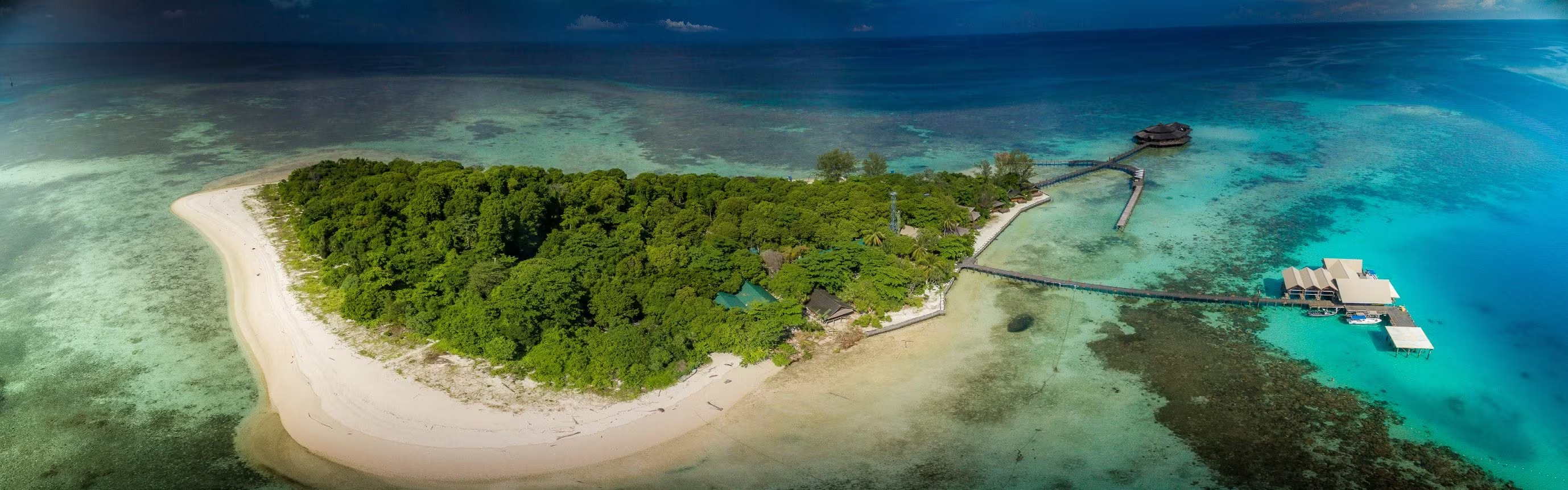
Lankayan Island Dive Resort is a small island resort in the Sulu Sea. It offers something different: snorkelling off the beach, bioluminescent plankton after dark, and the feeling of being somewhere few people have visited. It suits families with older children especially well.
Many lodges offer junior ranger programmes: structured activities where children plant trees, identify tracks, or try birdwatching with a guide. These are not token gestures; they're genuinely valuable.
A tip from our team: Ask lodges directly what their family-specific programming looks like before you book. The best ones have thought carefully about how to involve children, not just accommodate them.
Beaches and Coral Reefs — A Gentle Change of Pace
After a few days in the jungle, Borneo's coastline offers a welcome shift. The islands and beaches around Kota Kinabalu, including the Tunku Abdul Rahman Marine Park, are accessible, family-friendly, and beautiful.
Children as young as five can snorkel with proper guidance and fitted gear. The shallow reefs of Manukan and Sapi islands are calm, clear, and teeming with life. Children often say it's 'like being inside a fish tank.' Expect to spot clownfish, sea turtles, and staghorn coral gardens.
For non-swimmers or younger children, glass-bottom boat rides offer a no-gear-required window into the same world.
A tip from our team: Don't rush the beach segment. After the intensity of wildlife experiences, unstructured time in the water is valuable for children and parents alike.
Living Culture — Longhouse Visits and Indigenous Traditions
Borneo is home to over 30 indigenous ethnic groups, many of whom maintain traditions of weaving, music, farming, and communal living that offer families a genuinely different kind of learning experience.
Visits to Iban and Kadazan-Dusun communities are arranged through established cultural operators. These visits give children hands-on contact with crafts, cooking, and music that no classroom can replicate. Weaving rattan, watching rice wine ferment in a clay pot, or learning dance footwork, these are experiences that land differently from a museum exhibit.
A tip from our team: Preparation matters here. Before the visit, share a little context with your child about who the Iban people are and what the longhouse represents in their community. Curiosity with context is a form of respect.
A moment worth creating: Attempt the craft together, imperfectly. The shared laughter of two people equally confused by a weaving pattern is a small but real moment of connection.

What Apricous Can Arrange for Your Borneo Journey
Apricous specialises in parent-child travel journeys designed specifically around the dynamic of an adult and a child discovering something together. Borneo is one of our most requested destinations, and we know it well.
We handle everything: family-friendly accommodations designed for comfort, guides who specialise in engaging children, efficient routes that prevent fatigue, and insider local knowledge that creates memorable experiences.
We design Borneo journeys around your child's age, interests, and energy, whether for a week in Sabah, a coastal-and-cultural mix, or a longer trip across the island.
Design your Borneo journey with us →
Practical Information for Families Considering Borneo
Best time to visit: Sabah (Malaysian Borneo) is generally best visited between March and October, when rainfall is lower, and wildlife activity on the Kinabatangan is high. Avoid peak monsoon months (November–February) for rainforest and river activities.
Minimum recommended age: Most of Borneo's family-friendly activities are accessible from age five upward. River safaris, canopy walks, and cultural visits are all manageable for younger children with the right preparation. Serious trekking is suitable for children aged eight and above.
The main gateway is Kota Kinabalu International Airport (BKI). It connects to Kuala Lumpur, Singapore, and other regional hubs. Internal flights and road transfers connect the main areas.
Health and safety: Standard travel vaccinations apply. Mosquito protection is essential in forested areas. Reputable operators with whom Apricous works exclusively hold appropriate safety certifications and carry first aid equipment on all activities.

Closing Section
Borneo rewards families who come with curiosity rather than a checklist. The experiences it offers, standing quietly as an orangutan feeds ten metres away, gliding through river mist at dawn, watching your child plant a tree they'll never see fully grown, are not easily replicated anywhere else.
If you're considering it, we'd be glad to help you plan it properly.
Talk to our team about your Borneo journey → Explore all our parent-child destinations →
Frequently Asked Questions
Yes, Borneo is safe for children.
When you travel with vetted operators. The activities in this guide are all run by experienced professionals with strong safety records. Apricous only works with partners personally assessed by our team.
How long should a Borneo family trip be?
Ten to fourteen days gives enough time to cover Sabah's main highlights without feeling rushed — including wildlife, rainforest, river, and coast. Shorter trips of seven days are possible but require tighter routing.
Do children need to be experienced hikers?
No. Most trails that deliver wildlife sightings are gentle and well-maintained. The more demanding routes are optional, not essential.
What age is ideal for a first Borneo trip?
We find the sweet spot is roughly ages seven to twelve — old enough to engage meaningfully with wildlife and culture, young enough that the wonder is still very much intact.
We Don’t Just Plan Vacations, We Create Lifelong Memories and Unforgettable Adventures with your loved one.