
Cultural Travel With Kids: The People, Not Places

Cultural Travel With Kids: Why the People You Meet Can Matter More Than the Places You See
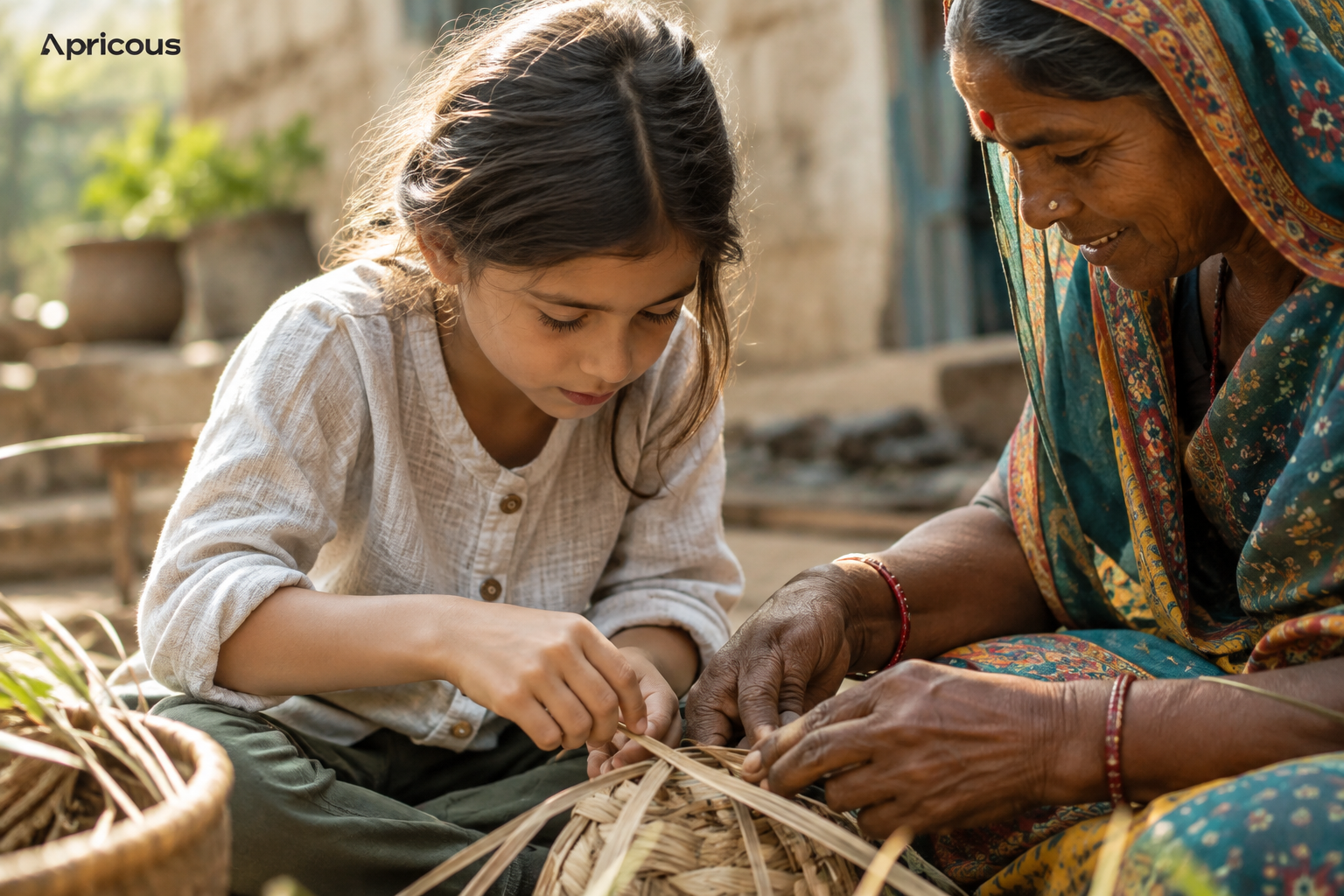
Ask a child what they remember from a trip six months later, and it's rarely the view. It's the woman who taught them to weave a palm leaf into a basket, the boy their age who showed them how to spot a hornbill call, the grandmother who let them stir the pot. The landscape fades into backdrop. The people stay.
Here's why that happens, what genuine cultural immersion with kids actually looks like, and how to tell the difference between seeing a culture and actually experiencing one.
What Do Kids Actually Remember From a Trip?
Children's travel memories cluster around social interaction far more than around scenery, according to research on childhood travel memory. A 2019 study on children's autobiographical memory of travel found that the social dimension of a trip, who they met and shared it with, shaped what stuck far more than the destination itself.
That tracks with how memory works more broadly in children: novelty plus emotional connection is what gets an experience filed away as something worth keeping. A waterfall is novel for about four minutes. A conversation with someone whose life looks nothing like yours, where you're both genuinely curious about each other, tends to last considerably longer in a child's mind.
Why Meeting People Changes What a Trip Becomes
A landmark asks nothing of a child. A person does. The moment a child has to actually engage, ask a question, offer something back, try a word in another language, is the moment a holiday starts becoming a memory instead of a photograph.
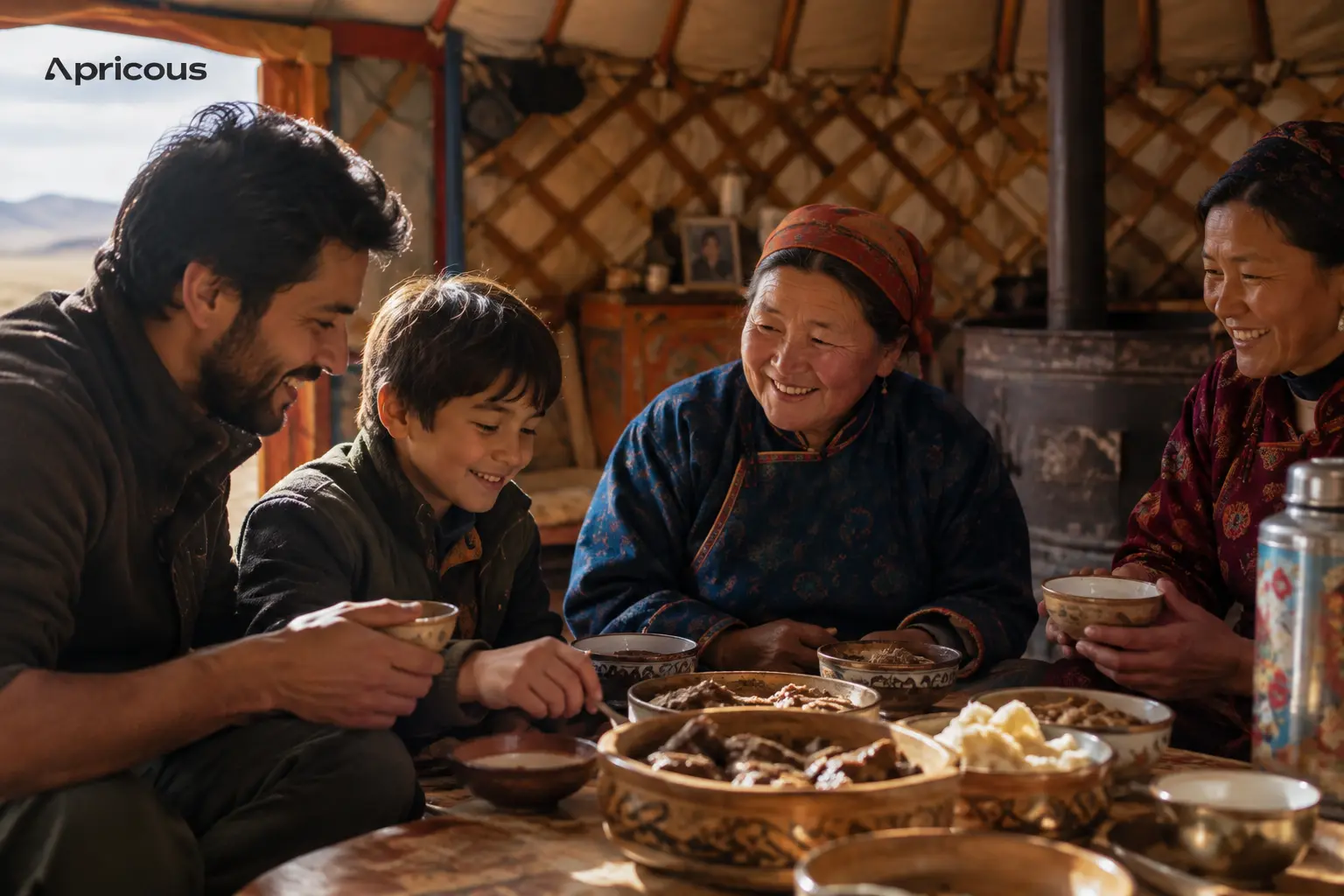
One family's trip to Mongolia captures this well: a father and son spent part of a day inside a Gobi Desert nomad family's home, sharing a meal in a life visibly harder than their own, met everywhere with genuine warmth. The father later said it made him appreciate everything he had in a way scenery alone never had. That's not a view doing the work. That's a relationship, however brief, doing it.
What Does Genuine Cultural Immersion With Kids Actually Look Like?
Genuine cultural immersion means learning a tradition from the people who actually practice it, not watching a staged version of it from a bus window. The difference sounds subtle until you've experienced both, and then it's obvious immediately.
It looks like an Iban family in Borneo teaching a child to cook bamboo chicken over an open fire, the technique passed down rather than performed for tourists. It looks like sitting with Mishmi weavers in Arunachal Pradesh as they explain what a particular pattern actually means to their community, not just how it looks. It looks like a Hadza family in Tanzania showing a child how they still track and gather, because that's genuinely how they eat, not because a tour operator asked them to demonstrate it that day.
None of this requires seeking out hardship for its own sake. It requires seeking out the real thing over the curated version of it, even when the real thing is less tidy.
Seeing a Culture vs. Experiencing One: What's the Actual Difference?
Seeing a culture happens through a window; experiencing one happens through an exchange. A bus stop at a "traditional village" where a family performs a dance on schedule is seeing. Sitting in that same family's kitchen, helping prepare a meal they were going to eat anyway, is experiencing.
The line isn't always obvious from a brochure, but a few honest questions usually reveal it:
- Would this interaction happen whether or not tourists were watching?
- Does the family or community receive a fair share of what you're paying?
- Is your child a participant in this moment, or an audience for it?
- Would you be comfortable if your own home were the destination?
- Is there room for an actual, unscripted conversation to happen?
A trip built around the first answer to each of these tends to leave a very different mark than one built around the second.
How Do You Turn an Unfamiliar Encounter Into a Real Conversation With Your Child?
The moment right after an unfamiliar experience is usually where the real learning happens, not the experience itself. A child who just watched someone build a fire without matches, or eat something they've never seen before, is full of questions. What you do with those next ten minutes matters more than the activity did.
Asking open questions rather than supplying conclusions is what turns a strange encounter into genuine curiosity instead of a checklist item. "What do you think that family's day looks like tomorrow?" does more than "wasn't that interesting?" ever will. This is also where discomfort earns its keep: a child who's slightly outside their comfort zone, and has a parent right there to talk it through with, tends to come home with a bigger, more generous idea of the world than one who stayed comfortable the whole time.
Why This Kind of Travel Isn't for Everyone
Cultural immersion travel asks for time, patience, and a willingness to let a trip move at the pace of a relationship rather than an itinerary. It isn't built for a family that wants to see six countries in ten days, and it was never meant to be.
If the goal is checking off famous sights on a tight schedule, a different kind of trip will serve that goal better, and there's nothing wrong with wanting that. But if the goal is watching your child sit across from someone whose life looks nothing like theirs and stay curious instead of uncomfortable, that's a different kind of travel entirely, and it tends to reward families willing to slow down for it.
Frequently Asked Questions
Do kids actually engage with cultural experiences, or do they just want the beach?
Most children respond well to hands-on cultural experiences, especially ones involving food, crafts, or another child their age, far more than passive sightseeing.
What age is right for this kind of travel?
Children from around 6 upward can engage meaningfully, though the depth of the experience is shaped more around each child's curiosity than a fixed age cutoff.
How do you avoid cultural experiences feeling exploitative or staged?
Look for interactions the community would have regardless of tourism, fair compensation for the families involved, and room for genuine two-way exchange rather than a performance.
Is this kind of travel safe for a single parent with a child?
Well-organized cultural travel typically includes local guides and pre-vetted community contacts, which tends to make it safer and smoother than independent travel to the same places.
Can cultural immersion happen closer to home, not just abroad?
Yes. India's own Northeast, home to communities like the Mising and Mishmi, offers genuine cultural immersion without needing a passport at all.
The Bottom Line
The places a child sees on a trip fade faster than most parents expect. The people they actually meet, and the conversations that follow, tend to stay. Choosing a trip built around real relationships, not just real scenery, is what makes the difference.
If this is the kind of travel you're picturing for your own family, Apricous designs each of its Adventure, Thematic, and Roots-based journeys around exactly this principle. Start a conversation about your family's trip and we'll help you find the right people to meet, not just the right places to see.
We Don’t Just Plan Vacations, We Create Lifelong Memories and Unforgettable Adventures with your loved one.